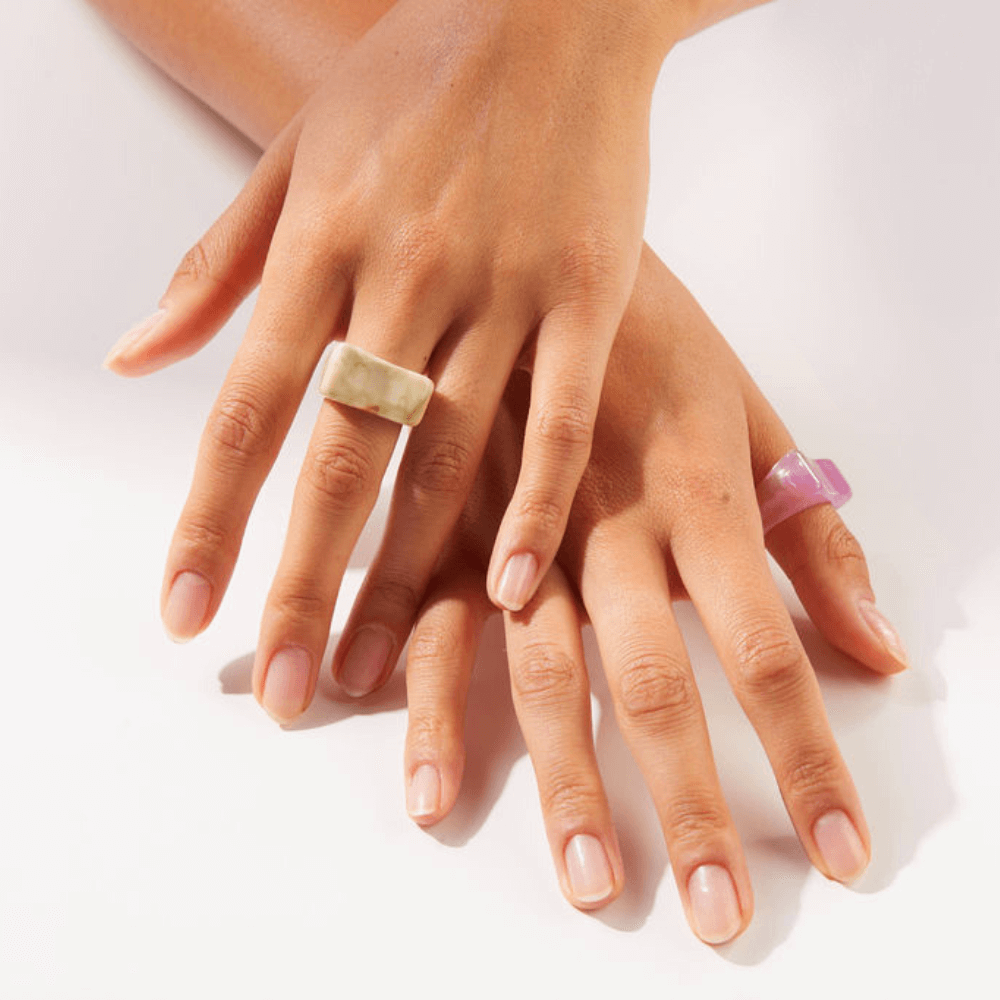

The Nails Nobody Talks About
You've probably heard about how skin changes after 40. Collagen loss. Slower cell turnover. Fine lines. The beauty industry has built an entire ecosystem around these changes.
But what about your nails?
Nails go through significant structural changes as we age, and most women don't know it's happening until they're already dealing with the frustrating results: nails that snap before they can grow, that peel in layers, that look dull no matter what you put on them, that seem to grow more slowly than they used to.
These aren't random. They're signs of a predictable, physiological process, and understanding it is the first step to managing it.
What Actually Changes in Nails After 40
Nail changes in midlife and beyond are well-documented. Here's what's happening at a structural level:
The Nail Plate Thins
The nail plate — the hard structure you see and paint — is made primarily of keratin, a protein that also makes up hair. As we age, keratin production slows, and the nail plate gradually becomes thinner and more fragile. Thinner nails are more prone to bending, breaking, and peeling.
Growth Rate Slows
In your 20s, fingernails grow at roughly 3–4mm per month. After 40, that rate drops — sometimes significantly. This means nails take longer to recover from damage, and it can feel like nails that break never quite get back to the length you want.
The Nail Surface Becomes More Ridged
Vertical ridges — those faint lines running from the base of the nail to the tip — become more prominent with age. They're the nail equivalent of fine lines on skin: a completely normal sign of aging, but also something that many women want to address.
Moisture Retention Decreases
Nails require a balance of moisture to stay flexible and strong. Too dry and they become brittle; too wet and they soften and peel. As we age, the nail's ability to retain moisture decreases, which tips most women toward the brittle side.
Why Brittle Nails Get Worse After Menopause
For many women, nail changes accelerate noticeably around perimenopause and menopause. This isn't a coincidence. Estrogen plays a role in maintaining nail strength and moisture, and declining estrogen levels after menopause contribute directly to increased brittleness and slower growth.
This is also the stage of life when nutritional deficiencies become more common, and several key nutrients are directly tied to nail health.
The Nutritional Connection: What Your Nails Are Telling You
Brittle, slow-growing nails are sometimes a symptom of underlying nutritional deficiencies. The most common culprits:
-
Iron — Iron deficiency (even without full anemia) can cause nails to become thin, brittle, and concave (a condition called koilonychia). Women are at higher risk of iron deficiency than men.
-
Zinc — Zinc plays a role in nail plate formation. Deficiency can cause white spots, ridging, and slow growth.
-
Protein — Since nails are made of keratin (a protein), inadequate dietary protein directly impacts nail strength and growth.
-
Vitamin C — Vitamin C is needed for collagen synthesis, which supports the nail bed.
If your nails have changed significantly and you're unsure why, a conversation with your doctor about nutritional blood work is worthwhile.
What Actually Helps: Evidence-Based Approaches
Not all nail care advice is created equal. Here's what actually has evidence behind it:
-
Consistent topical treatment — the Dr. Dana Nail Renewal System is a science-backed 3-step weekly treatment developed by Dr. Dana Stern specifically for this. Unlike standard nail hardeners that make nails brittle over time, it supplies the structural building blocks aging nails actually need.
-
Dietary protein — ensuring adequate protein intake (especially from complete protein sources) supports nail keratin production.
-
Daily cuticle oil — Dr. Dana's Nourishing Cuticle Oil is powered by Indigo Naturalis and jojoba oil to restore moisture and strengthen the nail's protective barrier. Applied morning and night, it prevents the brittleness that comes from excessive dryness.
-
Reducing chemical and water exposure — wearing gloves during cleaning and dishes significantly reduces nail damage.
What doesn't work: nail-hardening treatments that rely on formaldehyde or similar hardeners. These make the nail feel harder in the short term but more brittle over time.
What Dr. Dana Developed — and Why
Dr. Dana Stern is a board-certified dermatologist and a recognized leader in nail health — and the first dermatologist to develop a complete nail renewal system. Her clinical observation was consistent: women over 40 were experiencing nail changes that weren't being addressed by standard nail care products, which were designed primarily for younger nails with different structural needs.
The Dr. Dana Nail Renewal System works at the level of the nail plate itself, using glycolic prep for gentle chemical exfoliation, a custom-designed nail buffer to smooth damaged nail cells, and a deeply hydrating gel-oil to strengthen and seal. It takes 10 minutes per week. The result isn't harder nails; it's healthier ones. Over 264 five-star reviews from women who have seen a real difference.
The Bottom Line
Yes, your nails are aging. But nail aging isn't inevitable in the way that some aspects of aging are. With the right nutritional support, consistent topical treatment, and a few protective habits, nails in midlife can be strong, smooth, and genuinely beautiful.
Start paying attention to your nails the way you pay attention to your skin. They're telling you something, and they're worth listening to.