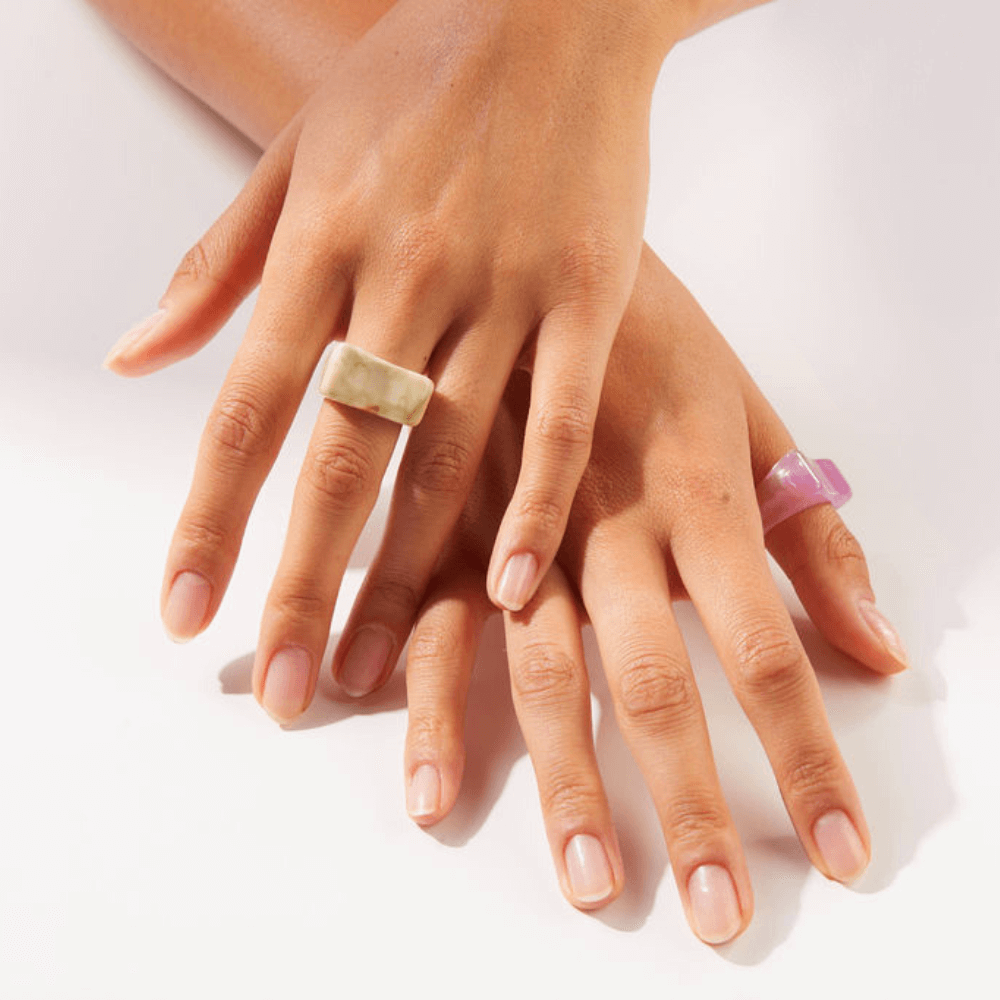

We've all been there. You look down at your manicure, which was perfect five days ago, and see the inevitable: the chips, the regrowth, the dullness. The urge to pick at it is strong, but before you start scraping, let's talk about the health of your nails.
As a dermatologist specializing in nail health, Dr. Dana Stern highlights that a major source of nail damage is actually the removal process. Harsh solvents like acetone are known to cause damage to both nails and cuticles by stripping them of essential moisture.
If you're searching for how to remove nail varnish from nails without leaving them dry, brittle, and white, you're asking the right questions. Let's dive into the science of removal, the truth about gels, and introduce a better way to bare your nails.
What Is Nail Varnish Remover Made Of? The Science Behind the Bottle
Most of us grab the cheapest bottle at the drugstore without a second thought. But have you ever stopped to ask, what is nail varnish remover made of?
The vast majority of removers on the market rely on one ingredient: acetone.
Is Nail Varnish Remover Acetone?
Short answer: yes, most traditional nail polish removers are acetone-based. Is acetone nail varnish remover the only option? Absolutely not—and that's important.
What Removes Nail Varnish? Understanding Your Options
There are two main categories of nail varnish remover:
1. Acetone-Based Removers
-
Primary ingredient: pure acetone (a powerful solvent)
-
Works quickly to dissolve polish
-
Found in most drugstore brands
-
Highly effective but extremely drying
2. Non-Acetone Removers
-
Use gentler solvents (like ethyl acetate or isopropyl alcohol)
-
Take slightly longer but protect nail health
-
Formulated to preserve natural moisture
Is Acetone Nail Varnish Remover Bad for Your Nails?
In short: it's incredibly harsh. Acetone is a powerful solvent that doesn't distinguish between the paint and your nail's natural oils. While it dissolves pigment quickly, it strips the nail plate of its essential hydration.
The Effects of Acetone on Nails
What acetone does to your nails:
-
Severe Dehydration – That chalky white residue you see after removal? That's actually visible dehydration of the nail plate.
-
Compromised Nail Structure – Acetone breaks down the keratin layers, leading to peeling, splitting, and brittleness.
-
Cuticle Damage – The protective seal around your nail becomes dry, cracked, and prone to infection.
-
Weakened Growth – Regular acetone exposure can slow nail growth and cause permanent thinning.
Think of it this way: you wouldn't cleanse your face with paint thinner. Why do the same to your nails?
How Do You Remove Nail Varnish Safely? Step-by-Step Methods
How to Remove Nail Varnish from Nails: The Gentle Approach
For regular polish, follow this dermatologist-approved method:
-
Choose a non-acetone remover (more on this below)
-
Apply remover to a cotton pad using a precision dropper for control
-
Press and hold the pad against the nail for 5-10 seconds
-
Wipe clean in one smooth motion from cuticle to tip
-
Hydrate immediately with cuticle oil
Pro tip: Never scrub or rub aggressively—this damages the nail surface even more than the remover itself.
How to Take Nail Varnish Off Without Remover: Emergency Methods
In a pinch without remover? Here are a few temporary solutions:
-
Rubbing alcohol – Less effective but works on fresh polish
-
Hand sanitizer – Contains alcohol that can break down polish
-
Clear top coat – Apply fresh top coat, then wipe while wet (works in emergencies)
Important: These methods aren't ideal for regular use. Invest in a quality remover to protect long-term nail health.
How to Get Nail Varnish Off Without Remover: The "Peel Method" Warning
Never, ever peel off regular polish. This removes layers of your natural nail plate, causing:
-
Thin, weak nails
-
White spots and patches
-
Permanent texture damage
-
Increased breakage
If polish is peeling on its own, use proper remover—even if only small areas remain.
The Truth About How to Remove Gel Nail Varnish at Home
We see this search a lot: how to remove gel nail varnish at home. However, DIY gel removal can lead to serious long-term damage if done incorrectly.
Dr. Dana's Advice on Gel Removal
Gel removal is highly skill- and technique-dependent, so it's crucial to see a very experienced and knowledgeable nail technician for professional removal.
Dr. Stern specifically warns against regular exposure to removal methods that use:
-
Gritty files or electric sanders
-
Excessive acetone soaking (10+ minutes)
-
Forceful scraping or peeling
-
DIY removal at home
These methods can damage nails, cuticles, and even the nail matrix (where the nail grows from). The damage from improper gel removal often outweighs any damage from the gel itself.
If you love gels, finding a professional who prioritizes the health of your natural nail is the best investment you can make. Ask your technician about their removal technique and ensure they're using gentle methods.
Better option for nail health: Consider switching to regular polish between gel applications to give nails recovery time. Regular polish can be safely removed at home with a non-acetone formula, giving you beautiful color without the commitment or removal risks.
How to Remove Nail Varnish from Skin
Non-acetone remover is gentle enough for skin cleanup around the nails:
-
Use a cotton swab with remover
-
Gently wipe away polish without scrubbing
-
Wash hands and apply lotion afterward
Note: If you've spilled polish on clothes, carpet, or other surfaces, consult a professional cleaner. Nail polish removers are formulated specifically for nails and may not be suitable for all materials.
A New Standard for Regular Varnish: The Dr. Dana Difference
For those who stick to regular nail varnish to avoid salon damage, there's still the issue of acetone. Why should taking off your makeup be a skincare ritual, while taking off your varnish is unnecessary stress on your nails?
Introducing: Hydrating Non-Acetone Nail Polish Remover
This isn't just a remover; it's a treatment. Dr. Dana formulated this to be completely acetone-free, meaning it dissolves regular nail varnish (even dark shades!) without stripping the nail's natural moisture barrier.
Designed specifically for regular nail polish. Not recommended for gel, shellac, or other professional polish systems—those require professional removal.
Why it's a game-changer for regular polish:
✓ Zero Acetone Uses gentle solvents specifically chosen to be tough on pigment but kind to keratin.
✓ The "Skinification" of Nails Infused with Grapefruit Peel Oil and Rosemary Leaf Extract, it hydrates and nourishes the cuticle and nail plate during the cleaning process.
✓ Fresh Citrus Scent No more headaches from toxic fumes. This formula smells like fresh grapefruit—naturally.
✓ Precision Dropper Unlike the gaping holes in drugstore bottles that spill everywhere, the precision dropper allows for the exact amount needed to be applied to a cotton pad—mess-free and efficient.
Salon Tip: Even if you get manicures professionally, Dr. Dana recommends bringing your own acetone-free polish remover to the salon. This helps avoid that harsh, dehydrating scrub at the start of the service.
Shop Hydrating Non-Acetone Nail Polish Remover →
How Do You Remove Nail Varnish with Non-Acetone Remover?
If you're wondering how to take nail varnish off without remover that burns or smells, this formula requires a slight shift in habit. Because it's gentle, you need to let the science do the work.
The proper technique:
-
Apply a dropper-full of fluid to a cotton pad
-
Press the pad against the nail and hold for 5-10 seconds (this allows the formula to break down the bond)
-
Wipe clean in one smooth motion
-
Repeat if needed for stubborn areas—don't scrub
What you'll notice: Polish comes off completely, but nails feel hydrated—not stripped.
Is Nail Varnish Remover the Same as Acetone? Understanding the Difference
This is a common question: is nail varnish remover the same as acetone?
Not necessarily. While many nail polish removers contain acetone, they're not identical:
-
Pure acetone = 100% acetone (extremely harsh)
-
Acetone-based remover = acetone + other ingredients (still harsh)
-
Non-acetone remover = gentle solvents + nourishing ingredients (like Dr. Dana's formula)
The difference matters for your nail health.
Post-Removal: The "Nail Polish Holiday"
Once the nail varnish is off, what comes next? If nails are feeling brittle or weak, Dr. Dana highly recommends taking a "nail polish holiday" to give them a chance to recover.
During This Break, Treat Naked Nails to TLC:
1. Shape Safely Always use a glass file to avoid nail damage. The Dr. Dana Precision Glass Nail File seals in the nail's natural keratin layer to reduce peeling, splitting, and breakage.
2. Revitalize Weekly Use the Dr. Dana Nail Renewal System once weekly. It exfoliates with glycolic acid, hydrates, and strengthens nails, leaving them with a naturally shiny finish—no varnish or dry time necessary!
3. Protect Daily Apply Nourishing Cuticle Oil daily. The cuticle is the nail's natural protective seal and the key to overall nail health.
4. Guard Against Water Damage If you're doing wet work like washing dishes, always wear rubber gloves to protect nails from excessive water exposure.
Frequently Asked Questions About Nail Varnish Removal
What is nail varnish remover made of?
Traditional removers are primarily made of acetone (a harsh solvent) with added fragrances. Non-acetone removers use gentler solvents like ethyl acetate combined with nourishing ingredients like oils and botanical extracts.
Is acetone nail varnish remover safe?
While acetone is effective, it's not safe for regular use. It severely dehydrates nails and cuticles, leading to brittleness, peeling, and damage. Non-acetone alternatives are much safer for nail health.
How do you remove shellac or gel nail varnish?
Gel polish (including Shellac) should always be professionally removed by an experienced nail technician. DIY removal risks serious damage to the nail plate, cuticle, and nail matrix. The cost of professional removal is far less than the cost of repairing damaged nails.
How to remove nail varnish from nails without acetone?
Use a non-acetone remover like Dr. Dana's Hydrating formula. Apply to cotton pad, press against nail for 5-10 seconds, then wipe clean. The gentle solvents break down polish without stripping natural oils.
Can regular nail polish remover remove gel polish?
No. Regular non-acetone remover is formulated specifically for traditional nail polish, not gel. Attempting to remove gel with regular remover won't work and may lead to picking or peeling, which severely damages nails.
How often should I remove and reapply nail polish?
From a nail health perspective, it's best to give nails a "polish holiday" every few weeks. During this break, focus on hydration and strengthening treatments. When you do wear polish, removing and reapplying every 5-7 days is ideal to prevent chipping that leads to picking.
The Complete At-Home Nail Care System
Healthy removal is just one piece of the puzzle. For truly beautiful nails, follow this clinical approach:
-
Remove with Hydrating Non-Acetone Nail Polish Remover
-
Prep with Glycolic Prep for Nails (gently exfoliates for better absorption)
-
Shape with Precision Glass Nail File (seals keratin, prevents splitting)
-
Buff with Buffing Block (reveals natural shine)
-
Nourish with Nourishing Cuticle Oil (supports nail's protective barrier)
-
Strengthen with Deep Hydrating Formula (natural nail strengthener)
Shop the No Polish Manicure Set →
The Verdict: Choose Health Over Convenience
Healthy nails don't just happen; they're created through smart habits. By swapping out harsh solvents for a hydrating alternative and seeking professionals for complex removals, you protect the integrity of the nail plate every time you switch shades.
Just like in skincare—a healthy canvas is essential to the cosmetic outcome. You can't achieve truly beautiful nails if you're constantly damaging them with harsh chemicals.
Ready to ditch the acetone?
Shop Hydrating Non-Acetone Nail Polish Remover →
Related Articles You'll Love
-
The 40s Nail Care Ritual: How to Strengthen, Nourish, and Protect Your Nails Through Hormonal Shifts
About Dr. Dana Stern Board-certified dermatologist and the only physician in the U.S. whose entire practice is devoted to nail health. Dr. Stern created Dr. Dana Nails to bring clinical-grade, science-backed nail care to everyone—because your nails deserve the same thoughtful care as your skin.