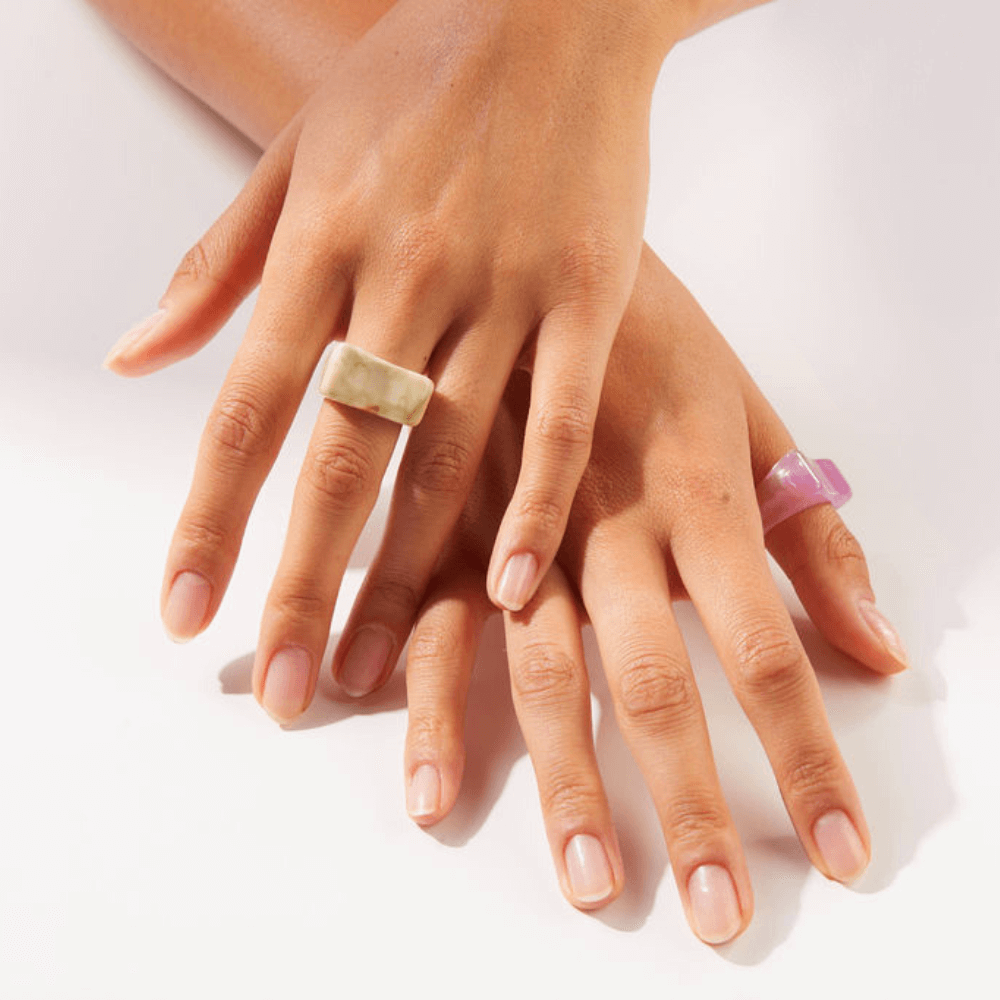

If your nails seem to peel, split, crack, or break at the slightest inconvenience, it is reasonable to wonder: Why are my nails so brittle?
Brittle nails can have more than one cause. Everyday factors such as repeated water exposure, drying nail products, manicure habits, and environmental conditions can all play a role. Aging and genetics can also influence how naturally strong or fragile your nails are, and in some cases an underlying health condition or medication may contribute.
The most useful approach is not simply to make a brittle nail feel harder. It is to look at what may be stressing the nail, reduce avoidable damage, and build a gentler routine around it.
What Do Brittle Nails Actually Look Like?
“Brittle” is often used as a catch-all description for nails that do not feel as strong or resilient as they used to. You may notice:
- Peeling or flaking at the tips
- Splitting along the edge of the nail
- Nails that crack or break easily
- More noticeable ridges or roughness
- Nails that seem dry and less flexible
These signs can overlap. A nail may peel first and then break because the edge has become thinner, or a dry nail may develop a snag that eventually turns into a split.
The important part is to look beyond the broken tip itself. What has the nail been exposed to repeatedly?
Why Are My Nails So Brittle?
There is rarely one universal answer. Some causes come from the nail itself, while others come from what the nail experiences day after day.
Repeated water exposure
Nails absorb water. When they are repeatedly soaked and then allowed to dry, the nail plate goes through repeated changes that can place stress on its layers. Over time, frequent wet work may contribute to peeling, splitting, and breakage.
Think about how often your hands are in water during an average day: hand washing, dishes, cleaning, bathing children, gardening, swimming, or occupational hand washing can all add up.
 Polish removal and manicure habits
Your manicure routine may matter just as much as the manicure itself. Frequent exposure to drying removers, prolonged removal processes, aggressive scraping, peeling off polish or enhancements, and excessive buffing can leave the nail plate more vulnerable.
If your nails became noticeably thinner or more fragile after repeated gel, dip, acrylic, or other enhancement removal, give extra attention to how those products are being taken off rather than simply covering the damage again.
Aging and genetics
Some people naturally have thinner or more fragile nails, and nail quality can change with age. The nail matrix, the area where the nail is formed, plays an important role in the size and quality of the nail that grows from it.
This means two people can have almost identical nail-care habits and still have very different levels of natural nail strength.
Dry weather and changing environments
Cold, dry weather and heated indoor environments can make nail and cuticle dryness more noticeable. Seasonal changes may be especially frustrating if your nails are already prone to peeling or splitting.
The answer is not necessarily an entirely new routine. Often, it means becoming more consistent about protection and moisture when the environment becomes more drying.
Health conditions or medications
Most brittle-looking nails do not automatically mean something is medically wrong. Still, sudden or unexplained nail changes deserve attention. Certain health conditions and medications can affect the nails, which is why a new or persistent change should not always be written off as a beauty concern.
If your brittle nails appeared suddenly, are becoming progressively worse, or are accompanied by other unusual nail or health changes, speak with your doctor or a board-certified dermatologist.
What Can Make Brittle Nails Worse?
When nails are already fragile, small habits can compound the problem. The goal is to reduce repeated stress wherever you reasonably can.
Do This
- Wear gloves for dishes and prolonged wet work
- Keep fragile nails at a manageable length
- Smooth snags before they catch and tear
- Moisturize nails and the surrounding skin consistently
- Use gentle manicure and removal techniques
Avoid This
- Peeling or picking off polish or enhancements
- Aggressive scraping or over-buffing
- Using your nails to pry, scrape, or open things
- Repeated unnecessary exposure to drying remover
- Assuming harder always means healthier
| Possible Contributor | What You May Notice | What to Change First |
|---|---|---|
| Frequent wet work | Peeling, splitting, soft or fragile tips | Use gloves and reduce unnecessary soaking |
| Aggressive manicures | Thin-feeling, rough, or easily damaged nails | Reduce buffing, scraping, and picking |
| Frequent polish removal | Dryness or increased fragility | Space out removal when possible and keep aftercare gentle |
| Dry weather | Dry nails, rough cuticles, more snagging | Increase consistent nail and cuticle moisture |
| Aging or genetics | Long-term tendency toward thinner or more fragile nails | Focus on protection and minimizing preventable damage |
How to Care for Brittle Nails
1. Protect your nails from wet work
If your hands are regularly submerged in water, gloves are one of the simplest changes you can make. Use them for dishes, cleaning, and other prolonged wet work whenever practical.
2. Keep fragile nails a little shorter
Longer nails have more surface area to catch, bend, and break. Keeping brittle nails shorter while they are especially fragile can reduce the leverage that turns a small snag into a larger break.
3. File snags gently
Do not wait for a rough edge to catch on clothing, hair, or fabric. Smooth it carefully rather than tearing or picking at it. A gentler filing approach can help you maintain the nail without creating additional trauma.
4. Be thoughtful about removers and enhancements
If your nails are already brittle, consider how often they are exposed to remover and how your manicures are being removed. Avoid peeling enhancements off and be especially cautious about aggressive scraping or repeated buffing of the natural nail.
5. Add moisture consistently
Dry nails and surrounding skin benefit from consistent conditioning. Build moisture into your routine after hand washing and whenever the nails or cuticles start to feel dry rather than waiting until they are visibly cracked or ragged.
6. Choose a routine you can repeat
Brittle-nail care does not need to involve a long lineup of products. The more important question is whether your routine reduces the exposures that are making your nails fragile and whether you can follow it consistently.
What About Nail Hardeners?

It is easy to assume that a brittle nail simply needs to become harder. But a nail that is too rigid can still crack and split.
Be especially thoughtful about products marketed primarily as nail hardeners. Older Dr. Dana educational content specifically cautions against formaldehyde- or formalin-containing nail hardeners because they can initially make nails feel hard while ultimately contributing to brittleness and irritation with continued exposure.
When your nails are fragile, think less about creating the hardest nail possible and more about protecting the existing nail from damage while maintaining a gentle, consistent routine.
When Should Brittle Nails Be Checked by a Dermatologist?
It is also worth getting professional guidance if you have changed your nail-care habits and the problem continues to worsen. A dermatologist can help determine whether there is another factor contributing to the change.
Brittle Nails: Frequently Asked Questions
Why are my nails suddenly brittle?
Start by asking what changed. More frequent hand washing, cleaning, manicures, polish removal, seasonal dryness, or a new source of nail trauma may be contributing. If the change is sudden without an obvious explanation or persists despite gentler nail care, talk with a doctor or board-certified dermatologist.
Can too much water make nails brittle?
Repeated water exposure can contribute to peeling and breakage. The issue is not that nails should never come into contact with water; it is the repeated cycle of soaking and drying, especially when combined with detergents or cleaning products. Gloves can help during prolonged wet work.
Should I stop getting manicures if my nails are brittle?
Not necessarily. Pay attention to the techniques being used. Aggressive buffing, scraping, picking, peeling, and prolonged removal processes can add stress to an already fragile nail. A gentler manicure and removal routine may make a meaningful difference.
Do nail hardeners fix brittle nails?
Making a nail feel harder does not necessarily address why it is brittle. Some hardening products may make the nail overly rigid, and formaldehyde- or formalin-containing formulas may contribute to brittleness and irritation over time. Focus first on reducing damage and protecting the nail.
How do you fix brittle nails?
There is no single fix for every brittle nail because the cause matters. Start with the factors you can control: protect your nails from repeated wet work, keep fragile nails shorter, avoid peeling or aggressive removal, smooth snags gently, add consistent moisture, and reassess any manicure habit that may be thinning or stressing the nail.
The Bottom Line
If your nails keep peeling, splitting, or breaking, do not focus only on the latest broken tip. Look at the routine and exposures surrounding it.
Repeated water exposure, aggressive manicure or removal habits, drying conditions, aging, and genetics can all contribute to brittle nails. The most practical first step is to reduce unnecessary stress on the nail, protect it during wet work, keep your routine gentle, and stay consistent.
And if the change is sudden, persistent, painful, or simply does not look normal for you, treat that as a reason to ask a dermatologist rather than continuing to experiment with cosmetic fixes.
Make Brittle-Nail Care More Consistent
If you are ready to add a dedicated nail-care step to your routine, explore the Dr. Dana Nail Renewal System and follow the current product directions.