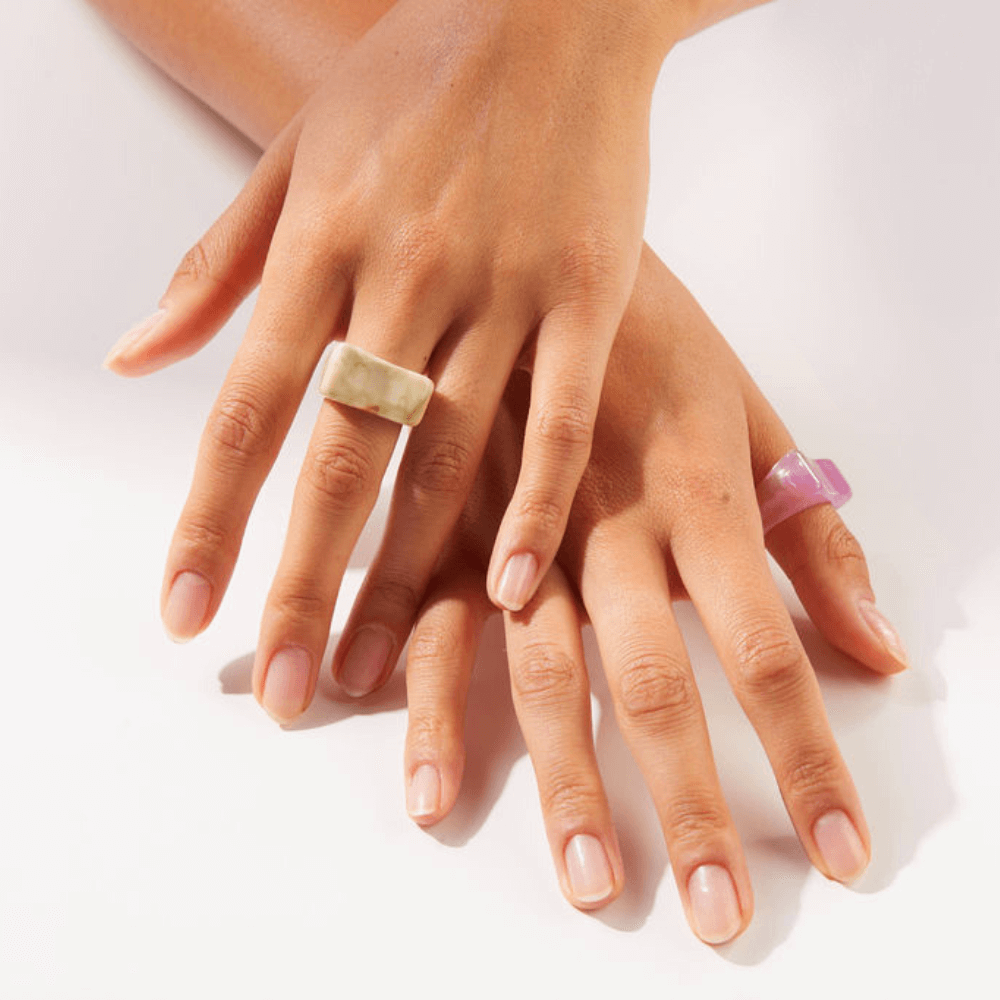

Strong, smooth, and naturally beautiful nails don't just happen. They're the result of good habits, the right care, and knowing what to look for. Here's how to read your nails like a pro.
Our nails tell a story. Healthy nail color, texture, and shape are visible signs of how well you're caring for your body, and your nails in particular. But with so many products, advice columns, and beauty trends in the mix, it can be hard to know what "healthy" actually looks like.
This guide cuts through the noise. Below, you'll learn what healthy fingernails look like, what warning signs to watch for, and if your nails need some work, how to get them back on track.
What Do Healthy Nails Look Like?
Healthy nails share a few common traits regardless of length, shape, or whether you wear polish. Here's what to look for:
1. Smooth texture with no pitting or deep grooves
Run a finger across your nail plate. Healthy nails feel smooth and uniform. Although generally, harmless, faint vertical ridges that run from the cuticle to the tip are common and tend to become more visible with age. What you don't want to see are deep pits (small puncture-like dents), significant horizontal grooves, or a layered, flaky surface.
If ridges are bothering you, the safest and most effective approach is to address the underlying nail texture rather than just fill in the surface. Dr. Dana's 3-step Nail Renewal System uses glycolic acid and natural nail strengthener Pistacia lentiscus to gently exfoliate and resurface. In a consumer use survey after just one application, 90% of participants agreed their nails appeared more even with fewer ridges, and 100% agreed their nails looked smoother and shinier.
2. Consistent, healthy nail color
Healthy nail beds appear pink because they're rich in blood vessels just beneath the surface. The nail plate itself should be mostly translucent to pale, with a small white half-moon called the lunula visible near the base. Occasional white spots from minor bumps or scrapes are normal and grow out over time.
If your nails look yellow and you wear dark polish frequently, a short polish holiday is often enough to restore your natural color. You can also try a gentle DIY brightening treatment: after using Dr. Dana's Glycolic Prep (Step 1) and Priming Wand (Step 2) to exfoliate the surface, soak nails for 10 minutes in a solution of 3–4 tablespoons of hydrogen peroxide mixed into half a cup of water, then gently scrub with a soft new toothbrush and rinse. Repeat daily until brightening occurs.
Acetone exposure is also a contributing factor to ongoing nail discoloration and dryness, so if you're working to brighten yellowed nails, switching to Dr. Dana's Acetone-Free Nail Polish Remover during the recovery period will help the process along.
Note on yellow toenails: If toenails are yellow and thickening, or if yellowing is appearing in new nail growth near the base, please visit a board-certified dermatologist. Up to 50% of yellow, thickened toenails have a fungal cause that requires professional diagnosis and treatment.
3. Flexibility without brittleness
Your nails take a lot of daily abuse, so they need to be both strong and slightly flexible. Healthy nails bend a little under pressure without snapping. If yours break, peel, or split frequently; that's a signal which often points to dryness, overexposure to water and harsh chemicals, or nutritional gaps.
To learn more about why nails become brittle and how to treat them, see our guide: Why Are My Nails Brittle? Causes and Solutions.
4. Hydrated cuticles and nail beds
The cuticle: The thin strip of non-living skin at the base of your nail, acts as a seal between the nail plate and the skin, keeping out bacteria and dirt. When this area is dry, cracked, or irritated, it's a sign your nails need moisture. Healthy cuticles are supple and intact, not ragged or peeling.
5. Steady, consistent growth
Fingernails grow from the nail matrix, located just beneath the cuticle. Healthy nails grow approximately 3mm per month. If your nails have suddenly stopped growing or you're noticing unexplained changes in growth rate, consult a dermatologist.
Healthy Nails vs. Unhealthy Nails: Key Differences
|
Healthy Nails |
Potential Warning Signs |
|
Smooth, even surface |
Pits, grooves, or horizontal ridges |
|
Pink nail bed |
White, yellow, blue, or dark discoloration |
|
Flexible but strong |
Brittle, peeling, or splitting easily |
|
Cuticles intact and supple |
Torn, swollen, or painful cuticles |
|
Gradual, steady growth |
Sudden slowdown or uneven growth |
|
Nail firmly attached to bed |
Nail separating or lifting from the nail bed |
When to See a Dermatologist
Nails can sometimes hint at broader health issues. Reach out to a board-certified dermatologist if you notice:
-
A dark streak running under a single nail — while pigmented bands can be benign, especially in people with darker complexions, a single dark band should always be evaluated promptly, as early nail melanoma can look similar and early detection is essential.
-
Significant nail color change across the whole nail — yellow, white, brown, or blue tones.
-
Nails that are curling, lifting from the nail bed, or thickening noticeably.
-
Bleeding, swelling, or persistent pain around the nail.
-
Nails that appear to have stopped growing.
Dr. Dana recommends scheduling an annual complete body check with your dermatologist — and going with bare nails (fingers and toes) so your doctor can thoroughly examine all 20 nails. Nails are a window into overall health and disease.
Are Yellow Nails Healthy?
Yellow nails are a common concern, and the cause matters. Frequent polish use (especially darker shades) along with self-tanning lotions or frequent cooking with yellow spices can leave behind pigment that temporarily stains the nail plate. Taking a 1–2 week polish holiday usually lets the natural color return, and the brightening treatment described above can accelerate the process.
However, if new nail growth comes in yellow right from the base, or if yellowing is accompanied by thickening or a change in texture, it could signal a fungal infection or another condition. When in doubt, see a dermatologist before self-treating.
How to Get Healthy Nails: Dr. Dana's Top Tips
Treat your nails once a week with a resurfacing system
The foundation of Dr. Dana's nail care philosophy is what she calls the "nail canvas" — getting the nail plate itself into the best possible condition before any polish or enhancement goes on top.
The 3-step Nail Renewal System does this with a once-weekly routine: the Glycolic Prep (Step 1) exfoliates the nail surface, the Priming Wand (Step 2) , our tri-grit wand with three levels of abrasiveness that gently primes and resurfaces the nail, and the Deep Hydrating Formula (Step 3) seals everything in with phospholipids, plant-based essential oils, and natural nail strengthener Pistacia lentiscus. Nails finish with a natural shine. No polish or dry time needed.
For nails that are very thin or painful from over-processing, Dr. Dana recommends using Step 3 (the Deep Hydrating Formula) on its own every day for two weeks before starting the full weekly system.
Switch to a glass nail file
This one surprises many people: traditional emery boards cause microscopic tears at the tip of the nail that can lead to peeling, splitting, and breakage over time. Dr. Dana's Precision Glass Nail File works differently — it seals in the nail's natural keratin layer rather than tearing it open. See the difference for yourself here.
When filing, always work in one direction rather than sawing back and forth, and skip filing altogether if you have nail separation (onycholysis).
Keep nails dry and protected
Here's a fact most people don't know: nails are 1,000 times more absorptive of water than skin. Repeated or prolonged exposure to water creates significant strain on nail cells, making them far more prone to brittleness and breakage. When doing dishes, cleaning, or any wet work, wear rubber gloves and if your hands are exposed to a lot of water throughout the day, wear cotton gloves underneath the rubber ones to prevent trapped moisture.
Ditch the acetone remover
Acetone, found in most standard nail polish removers, dehydrates nails significantly — and this effect compounds with regular use. The solution is simple: switch to Dr. Dana's Acetone-Free Nail Polish Remover. It takes a little longer to remove polish than straight acetone, but the difference in nail health over time is well worth it. If you go to a salon, consider bringing your own bottle. Most salons won’t have any problems with it.
For salon visits where gel or acrylic removal is unavoidable, protect your cuticles and surrounding skin during the soak by creating a barrier with a small dab of petrolatum, Aquaphor, or A&D ointment before the acetone is applied.
Don't cut your cuticles
The cuticle exists to seal the nail and protect the nail matrix from bacteria. Cutting it breaks that protective seal and opens the door to infection. Instead, gently push cuticles back after a shower when skin is soft. Never use nail brushes or tools to aggressively clean beneath the nail, either; this is one of the most common causes of nail separation.
Take regular nail polish holidays
Even standard polish, if applied frequently without breaks, can make nails more prone to brittleness, breakage, and peeling. Dr. Dana recommends taking regular "nail polish holidays" and using the time to nurture the nail canvas with the Nail Renewal System. Just because you're not wearing polish doesn't mean your nails can't look beautiful: the system leaves nails with a natural, healthy-looking shine on its own.
Move your body
It may not be the first thing that comes to mind, but cardiovascular exercise benefits your nails. Fingernails respond to increased circulation, which supports healthy growth and strength. If cardio isn't already a regular part of your routine, it's worth adding. Trust us, your nails (along with the rest of you) will truly benefit.
Nail Care Don'ts
A few habits worth dropping for good:
Don't bite your nails or pick at your cuticles. Beyond the cosmetic impact, nail biting can lead to serious complications including bacterial and yeast infections around the cuticle (paronychia), pigmented bands in the nail from stimulation of melanocytes, and even transfer of oral viruses to the fingertip. If nail biting is a habit you're trying to break, read our in-depth guide: Why do we bite or pick our nails?
Don't pull hangnails. Pulling can tear live tissue and leave an open wound near the nail bed. Use clean nail scissors to clip the hangnail carefully at its base instead.
Don't use acetone-based removers regularly. The drying effect accumulates with repeated use. Dr. Dana's Acetone-Free Nail Polish Remover is a gentle alternative that won't strip your nails of moisture every time you change your color.
Don't cover nail separation with a bandage. If you're dealing with a nail that's lifting from the nail bed, bandages create trapped moisture that worsens the condition. Keep the area as dry as possible and see a dermatologist if separation is persistent or affects multiple nails.
Don't ignore changes. A nail issue that's been lingering for more than a few weeks without improvement deserves professional attention.
A Note on Salon Manicures
Professional nail care can absolutely be part of a healthy nail routine; but with the right precautions:
-
Choose salons with a current state license and work with licensed technicians only.
-
Confirm that all tools are sterilized between clients.
-
Ask your technician not to remove your cuticles. This breaks the natural barrier and significantly increases infection risk.
-
If you use a foot bath, ask how it's cleaned between appointments.
-
For gel, dip, or acrylic removal, make sure your technician is experienced. Avoid salons that use a gritty file or electric sander aggressively on the nail surface. The removal technique is highly skill-dependent and can cause significant damage to the nail plate and matrix when done carelessly.
The Bottom Line
Healthy nails that are smooth, pink, flexible, and well-hydrated, are a reflection of consistent care. They don't require an elaborate routine, just a few smart habits practiced regularly: protecting nails from excess water and harsh chemicals, filing with a glass file, moisturizing cuticles, giving nails regular breaks from treatments, and using a weekly resurfacing system to keep the nail canvas in its best shape.
Ready to give your nails the expert care they deserve? Explore Dr. Dana's full nail care collection — formulated by a board-certified dermatologist to strengthen, nourish, and restore nails at every stage.